

Clinical Cardiac Electrophsyiology Fellowship
Clinical Cardiac Electrophysiology Fellowship
Application Deadline | July 30, 2026
Next Start Date | July 1, 2027
The Clinical Cardiac Electrophysiology Fellowship is a two-year program. The EP fellow is trained in the diagnosis and treatment of cardiovascular diseases and works closely with the staff electrophysiologists.
Fellows will spend part of each year dedicated to clinical or basic science research activities and are expected to submit their results for publication. Fellows also teach residents and medical students at the bedside.
Information for Applicants
Program Overview
The Clinical Cardiac Electrophysiology Fellowship at Texas Tech University Health Sciences Center is an advanced two-year subspecialty program designed to develop independent electrophysiologists with outstanding clinical, procedural, and academic skills. The program is based at a high-volume tertiary electrophysiology center at University Medical Center in Lubbock with an integrated network of satellite sites in Odessa and Midland, providing fellows with broad exposure to diverse patient populations and practice settings. We choose 1 fellow every other year.
Program Aims
- Prepare fellows for autonomous practice, Train fellows to provide safe, effective, patient-centered electrophysiology care across the spectrum of arrhythmia disorders, progressing to conditional independence in line with ACGME expectations for fellowship training.
- Leverage a high-volume, multi-site EP practice, Utilize the high procedural volume at the main EP center at Lubbock and affiliated satellite centers in Odessa and Midland to ensure robust hands-on experience in complex EP procedures, device management, and longitudinal arrhythmia care.
- Meet and exceed ACGME competencies, Structure the curriculum, supervision, and evaluation processes to ensure fellows achieve competency-based milestones in patient care, medical knowledge, professionalism, interpersonal and communication skills, practice-based learning and improvement, and systems-based practice.
- Respond to regional and community needs, Design and conduct the program in a manner consistent with the needs of West Texas and the Permian Basin communities, improving access to advanced electrophysiology care through both the main campus and satellite sites.
- Promote scholarship and quality improvement, Foster a culture of inquiry in which fellows participate in clinical research, quality improvement, and patient safety initiatives focused on arrhythmia care and EP services across the multi-site system.
Goals by ACGME Competency
Patient Care
- Provide compassionate, evidence-based care for patients with bradyarrhythmias, tachyarrhythmias, channelopathies, and device-related conditions in inpatient, outpatient, and procedural settings.
- Safely perform and interpret a wide range of EP procedures (including diagnostic EP studies, ablations, and device implants and revisions), achieving progressive responsibility and meeting or exceeding procedure volume benchmarks through exposure at the main EP lab and satellite centers in Odessa and Midland.
Medical Knowledge
- Demonstrate in-depth understanding of cardiac electrophysiology, including cardiac anatomy, cellular electrophysiology, arrhythmia mechanisms, mapping technologies, and device therapies.
- Apply current guidelines, consensus statements, and emerging evidence to the management of complex arrhythmias in diverse practice environments across the TTUHSC system.
Practice-Based Learning and Improvement
- Use clinical data from the high-volume EP practice to identify opportunities for improvement in procedural outcomes, workflow, and patient safety, and participate in structured quality improvement projects.
- Regularly seek and incorporate feedback from faculty at the primary and participating sites, using outcomes, registries, and case reviews to guide self-directed learning.
Interpersonal and Communication Skills
- Communicate effectively with patients and families regarding indications, risks, benefits, and alternatives to EP procedures and device therapy, with attention to health literacy and cultural sensitivity across urban and regional satellite sites.
- Collaborate with referring physicians and multidisciplinary teams at Lubbock, Odessa, and Midland to coordinate care, provide consultative input, and support smooth transitions across care settings.
Professionalism
- Demonstrate accountability, ethical behavior, and responsiveness to patient needs across all training sites, including adherence to professional and institutional standards.
- Model integrity and respect in interactions with patients, families, and health care team members, including at satellite locations where fellows may serve as the primary EP contact.
Systems-Based Practice
- Understand and effectively utilize the resources of a multi-site academic health system, including telehealth and shared protocols, to deliver coordinated EP care across Lubbock, Odessa, and Midland.
- Recognize and address system-level factors—such as geography, access to specialty care, and social determinants of health—that affect arrhythmia outcomes in West Texas and the Permian Basin, and participate in initiatives that improve equity and access.
The Electrophysiology (EP) Fellowship at Texas Tech University Health Sciences Center is anchored in a high-volume EP program with two dedicated EP laboratories in Lubbock and one EP laboratory in Odessa, providing a broad and intensive procedural experience.
Fellows are primarily based in Lubbock for procedures and receive comprehensive exposure to all major ablation modalities, including supraventricular tachycardia, atrial flutter, atrial fibrillation, ventricular tachycardia, and complex substrate ablations. The EP labs are fully equipped with all three major mapping platforms—Biosense Webster, Boston Scientific/Opel, and the Affera Medtronic mapping system—ensuring that fellows develop proficiency across industry-standard technologies. In addition to ablation procedures, the program performs lead extraction, left atrial appendage occlusion (Watchman), and manages approximately 3,000 cardiac implantable electronic devices in clinic, supported by three satellite clinics that broaden fellows’ longitudinal and community-based experience. Over the two-year fellowship, trainees participate in more than 500 EP procedures on average, with the clear goal of providing intensive, hands-on training that prepares graduates for independent, high-skill electrophysiology practice.
Thank you for your interest in Texas Tech University Health Sciences Center Interventional Cardiology fellowship training program.
Our program participates in the National Residency Matching Program (NRMP) and is registered with Electronic Residency Application Service (Program ID 1544814006— July Application Cycle).
Applications will be accepted through July 30th. Interviews will be scheduled based on review by the program director and Electrophysiology faculty.
There are certain eligibility criteria which must be met to apply for the Interventional Cardiology fellowship training program:
- Must apply via the Electronic Residency Applicant Service (ERAS) and must enroll in the National Residency Matching Program (NRMP)
- Be of good professional character with at least three letters of recommendation attesting to your academic and personal qualifications
- Graduate of a U.S, or Canadian Medical School accredited by the Liaison Committee on Medical Education (LCME), or a medical school outside the United States and Canada with a current valid certificate from the Educational Commission for Foreign Medical Graduates (ECFMG)
- Graduate of an ACGME-accredited three-year internal medicine residency training program and three-year cardiology fellowship training program.
- Our program only sponsors J-1 visa
- Completion and pass all three U.S. Medical Licensing Examination (USMLE) steps
- The selection process stringently evaluates performance on the United States Medical Licensing Examination (USMLE), grades in preclinical or clinical courses, letters of recommendation, communication skills, and personal qualities
- The department does not discriminate on the basis of gender, race, age, religion, color, national origin, sexual orientation or veteran status
- Interviewing is conducted during the months of January and February.
One fellow is selected from a highly competitive field of applicants for the training program. The fellow is selected from among eligible applicants on the basis of their ability, academic credentials, aptitude, communication skills, intellectual and humanistic qualities, personal attributes (such as motivation and integrity), preparedness, and their ability to benefit from the program. These qualities may be accessed through the review of academic records, letters of recommendation, standardized test scores and other means, including interviews.
Application Check List:
- ERAS Application
- ERAS Addendum Form (only needed upon invitation for an interview)
- Personal Statement
- Curriculum Vitae (in chronological order with no gaps)
- Dean's Letter
- Medical School Transcript
- 3 Letters of Recommendation
- Notarized copy of Diploma (only needed upon invitation for interview)
- Program Director's Letter/Certification (if had previous residency training in the U.S.)
- Copy of State License (if applicable)
IMG (International Medical Graduates) Additional Requirements:
- Only accepts J-1 Visa
- No US clinical experience required but is preferred
- Must have ECFMG certificate at interview
- Clerkship Affidavit (only needed upon interview invitation)
- Valid ECFMG Certificate (required BEFORE invited for interview)
- Authorization form for confirmation of ECFMG certification (only needed at interview)
*TTUHSC does not accept H-1 Visas
Benefits:
- Paid Health/Dental/Life/Disability Insurance
- Worker's Compensation Insurance
- Professional Liability Insurance
- Free Parking
- 30 Days Paid Vacation/sick/Personal leave per year (non-accruable)
- 10 Days Paid Educational Leave per year (non-accruable)
- Stipend--Funds will accrue throughout the year and will be allowed to be carried over from year to year
- Paid ACLS Course renewals
| YEAR | SALARY |
|---|---|
| PGY1 | $65,764.23 |
| PGY2 | $67,250.96 |
| PGY3 | $69,374.62 |
| PGY4 | $72,532.92 |
| PGY5 | $74,685.79 |
| PGY6 | $76,841.81 |
| PGY7 | $78,997.84 |
The TTUHSC Clinical Cardiac Electrophysiology fellowship is comprised of:
- Cardiac Electrophysiology Lab
- Outpatient Clinic
- Consultative Services
- Inpatient Service
- Research
- Conferences
- On-Call Experience
- Independent Reading and Studying
- Discussion and Interaction with faculty and other fellows
- Extramural Conferences and Training Programs
The fellow has only one rotation. They are responsible for the EP service. In addition, they will have one full-day continuity clinic per week.
As is expected of electrophysiologists in “real world” practice, these experiences occur simultaneously throughout the electrophysiology training. This allows the fellow to participate in all aspects of the care of a wide variety of clinical cardiac electrophysiology patients including pre-procedural assessment, diagnostic and therapeutic procedures, post procedural care in the hospital and long-term, and in research relative to the field. As the fellow learns and gains experience, it is expected that they will integrate this knowledge and finesse to become a complete, well rounded, competent clinical cardiac electrophysiology consultant.
Welcome to the Clinical Cardiac Electrophysiology Fellowship Program at Texas tech University Health Sciences Center in Lubbock.
Our program is dedicated to training the next generation of electrophysiologists through a rigorous, comprehensive and supportive learning environment. We are committed to developing physicians who not only excel in procedural skill and clinical judgment, but who also demonstrate professionalism, curiosity and a commitment to lifelong learning.
At TTUHSC, fellows benefit from a diverse patient population and a broad spectrum
of cardiac arrhythmia cases, providing extensive exposure to both common and complex
electrophysiologic conditions. Our curriculum is designed to ensure mastery of invasive
and non-invasive electrophysiology, including advanced ablation techniques, device
implantation and management, and emerging technologies in the field.
Equally important, we take pride in fostering a culture of mentorship and collaboration.
Fellows work closely with experienced faculty who are dedicated to individualized
teaching and career development. We strive to create an environment where fellows
feel supported, challenged and empowered to grow into confident, independent electrophysiologists.
Lubbock offers a welcoming community with a high quality of life, allowing fellows to maintain balance while pursuing a demanding and rewarding training.
We are proud of our program and the physicians we train, and we look forward to helping you achieve your professional goals in the dynamic field of cardiac electrophysiology.

Deephak Swaminath, MD, MBA, FACHE, FACC,FHRS
Fellowship Program Director
About Dr. Swaminath:
Dr. Deephak Swaminath, MD, MBA, FACC, FHRS, is a cardiac electrophysiologist and Assistant Professor at Texas Tech University Health Sciences Center. He serves as Program Director of the Cardiac Electrophysiology Fellowship and Instructor at Rawls College of Business in Lubbock, Texas. He completed his electrophysiology training at Yale School of medicine and joined Texas Tech as a faculty member.
Dr. Swaminath has built a high-volume electrophysiology program in West Texas, leading advanced ablation, device therapy, and structural heart initiatives, including the region's first WATCHMAN program. He performs over 350 atrial fibrillation ablations annually and has established comprehensive EP lab and device management services.
With dual training in medicine and business, he focuses on integrating clinical excellence with operational innovation. He is a Fellow of the Heart Rhythm Society, American College of Cardiology and has been an invited speaker at national and regional cardiology conferences.
The Electrophysiology Fellowship is involved in multiple conferences, about four per month, to enhance the educational experience of the fellows. EP fellows are required to attend the ECG conferences which includes quality assurance, morbidity & mortality, journal club and electrophysiology board review.
Hospital
UMC- Our primary teaching hospital is University Medical Center (UMC), a county-supported tertiary medical facility offering a wide variety of services. Patients are referred from Lubbock and surrounding counties over a 200-mile radius, including eastern New Mexico. EP Lab days are Monday, Tuesday, Thursday and Friday. The EP Fellow takes no weekend calls.
Clinic
The Cardiovascular Center of Excellence (CCVH) is in the professional building located
adjacent to Texas Tech University Health Sciences Center and is where the clinics
are held on Wednesday for the full day, once a week.
Cardiology fellow clinic is held at pre-scheduled times. Patients are seen by the
fellow and are presented to the faculty member for discussion and approval of planned
management.
This a continuity clinic, so you follow your patient for the year you are a fellow
Faculty
Meet our accomplished, American Board–certified Residency Faculty, whose diverse specialties and talents advance education and serve the Lubbock community and beyond here.
Fellows
View our current fellow of the TTUHSC Clinical Cardiac Electrophysiology Fellowship below.
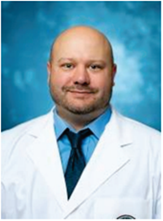
Ty Whisenant, MD, PhD, MS
- Fellow-Cardiovascular Disease, TTUHSC Lubbock, 2022 - 2025
- Resident-Internal Medicine, TTUHSC Lubbock, 2019 - 2022
Got Questions?
We're here to help. Contact us if you have questions.
Matt Molinar
Fellowship Coordinator
3601 4th St. MS 9410
Lubbock, TX 79430
806.743.9580