


Rural & Community Health
F. Marie Hall Institute for Rural and Community Health
The F. Marie Hall Institute for Rural and Community Health works in close collaboration with the people of Texas for the advancement of health through innovative and scholarly research, the advanced use of technology, comprehensive education, and outreach.
From its inception in 2006, the Institute has promoted new and advanced rural and
community health initiatives across Texas to help expand access to care. Signature
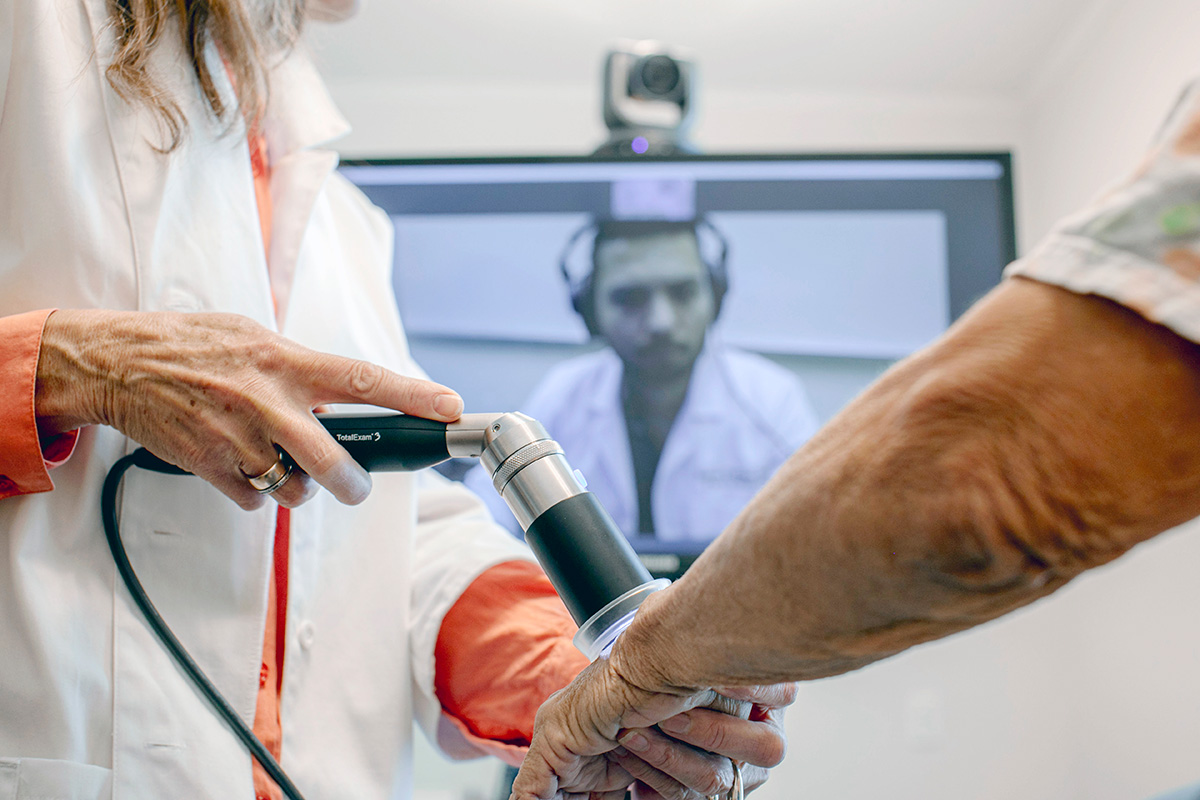
programs include the TexLa Telehealth Resource Center (TRC), Next Gen 911 Telehealth
Project, and the West Texas Area Health Education Center (AHEC).
Rural & Community Health Programs
- TexLa Telehealth Resource Center (TexLaTRC)
- TexLaTRC.org promotes the adoption, expansion, and successful practice of telehealth and telemedicine
in Texas and Louisiana. TexLa delivers technical assistance, provides education and
outreach, and offers valuable resources to support health care organizations and providers
in building and strengthening their programs. Key educational programs include Frontiers
in Telemedicine and hosting Project ECHO sessions that connect subject-matter experts
with local and rural health care providers to address a wide range of health-related
issues.
- TexLaTRC.org promotes the adoption, expansion, and successful practice of telehealth and telemedicine
in Texas and Louisiana. TexLa delivers technical assistance, provides education and
outreach, and offers valuable resources to support health care organizations and providers
in building and strengthening their programs. Key educational programs include Frontiers
in Telemedicine and hosting Project ECHO sessions that connect subject-matter experts
with local and rural health care providers to address a wide range of health-related
issues.
- Next Gen 911 Project
- Next Gen 911 Telehealth Project developed in partnership with the Texas Commission for State Emergency Communications
(CSEC), focuses on equipping rural Emergency Medical Service (EMS) providers across
Texas with telemedicine technology to connect them with their designated trauma centers.
The Institute supports the pilot by providing equipment, training, technical assistance,
and data collection to promote the adoption of telemedicine technology for emergency
services, community paramedicine, prehospital care, and trauma care.
- Next Gen 911 Telehealth Project developed in partnership with the Texas Commission for State Emergency Communications
(CSEC), focuses on equipping rural Emergency Medical Service (EMS) providers across
Texas with telemedicine technology to connect them with their designated trauma centers.
The Institute supports the pilot by providing equipment, training, technical assistance,
and data collection to promote the adoption of telemedicine technology for emergency
services, community paramedicine, prehospital care, and trauma care.
- West Texas Area Health Education Center (AHEC)
- West Texas AHEC strives to bridge gaps in rural health care workforce development
through connecting academic institutions, clinical and community-based organizations
and health care professionals across the region by offering a wide range of initiatives,
including the AHEC Jr. and Collegiate Scholars Programs, Community Health Worker certification,
High School Telemedicine Training, and continuing education hours for various health
care specialties. West Texas AHEC utilizes a multidisciplinary approach to provide
educational resources, clinical training opportunities, and professional development
experiences to address the unique challenges and needs of West Texas. http://www.westtexasahec.org/
- West Texas AHEC strives to bridge gaps in rural health care workforce development
through connecting academic institutions, clinical and community-based organizations
and health care professionals across the region by offering a wide range of initiatives,
including the AHEC Jr. and Collegiate Scholars Programs, Community Health Worker certification,
High School Telemedicine Training, and continuing education hours for various health
care specialties. West Texas AHEC utilizes a multidisciplinary approach to provide
educational resources, clinical training opportunities, and professional development
experiences to address the unique challenges and needs of West Texas. http://www.westtexasahec.org/
-
Project Extension for Community Healthcare Outcomes (ECHO)
Project ECHO is a revolutionary model of collaborative education and care management that aims to democratize access to specialty knowledge and improve outcomes for underserved communities:- Metabolic ECHO focuses on metabolic health, where chronic conditions such as diabetes and cardiovascular
disease often go underdiagnosed or undertreated, especially in rural communities.
https://iecho.org/public/program/PRGM17085468590551GBSK940XH - Dementia Care ECHO provides an education/training series to support clinicians with continuing education,
tele-mentoring, and collaboration opportunities to increase quality care and support
for persons living with dementia and their caregivers. https://iecho.org/public/program/PRGM1764795538127U96OW034GU
- Metabolic ECHO focuses on metabolic health, where chronic conditions such as diabetes and cardiovascular
disease often go underdiagnosed or undertreated, especially in rural communities.
Rural & Community Health Resources
The Rural Health Transformation Program, authorized under the One Big Beautiful Bill Act, represents a historic federal investment to improve health care access, quality, and outcomes in rural communities. As part of the $50 billion total allocation, Texas was awarded $281.3 million for Budget Period 1 (Dec 29, 2025 to Sept 30, 2026). Texas is expected to receive approximately $1.4 billion over five years.
To implement and administer this funding, the Texas Health and Human Services Commission (HHSC) established the Rural Texas Strong Program, which serves as Texas’ approved state plan under the federal Rural Health Transformation Program. Rural Texas Strong focuses on advancing innovative, scalable, and sustainable strategies to modernize rural health systems, expand access to care, and improve health outcomes for rural Texans. With Centers for Medicare & Medicaid Services (CMS) approval of the revised Budget Period 1 Project Narrative and Budget Narrative on April 7, 2026, Rural Texas Strong has now entered active Year One implementation.
Rural Texas Strong funding is organized around six statewide priority initiatives, as approved by CMS in the Texas Rural Health Transformation application:
- Make Rural Texans Healthy Again
- Rural Texas Patients in the Driver’s Seat
- Lone Star Advanced AI and Telehealth
- The Next Generation of the Small Town Doctor and Team
- Unified Care Infrastructure and Rural Cyber Protection
- Infrastructure and Capital Investments for Rural Texas
Year One funding opportunities will include Initiatives 1, 4, and 6. Each Initiative
is expected to be released in phases through mid to late 2026 and will be announced
through HHSC’s official channels. Rural Texas Strong funding is not expected to be
awarded directly to institutions of higher education. Instead, funding will flow primarily
through rural hospitals, hospital districts, and other qualifying rural health entities.
Rural Affairs Engagement
In support of this effort, the F. Marie Hall Institute for Rural and Community Health, through the Division of Rural Affairs at Texas Tech University Health Sciences Center (TTUHSC), will help provide support as a trusted advisor to partner on these efforts throughout the region, including:
- Monitor Rural Texas Strong developments;
- Share timely updates as additional guidance and opportunities become available; and
- Identify appropriate opportunities to collaborate across TTUHSC and with rural partners as Rural Texas Strong implementation advances.
Helpful Resources below:
Rural Health Transformation Program | Provider Finance Department
Subscribe to receive email updates directly from Texas Health and Human Services Commission.
To learn more and share project ideas, please contact us at fmhirch@ttuhsc.edu.
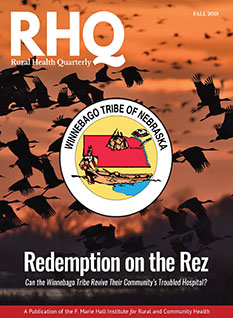 Rural Health Quarterly is a publication produced by F. Marie Hall Institute for Rural
and Community Health with a focus on issues that affect the health of rural communities.
Rural Health Quarterly is a publication produced by F. Marie Hall Institute for Rural
and Community Health with a focus on issues that affect the health of rural communities.
Johnson, L.A., Phillips, J.A., Mauer, C., Edwards, M., Balldin, V.H., Hall, J.R., Barber, R., Conger, T.L., Ho, E. H. & O'Bryant, S.E. The impact of GPX1 on the association of groundwater selenium and depression: a project FRONTIER study. BMC Psychiatry 2013 Jan 4, 13:7.
O'Bryant SE, Xiao G, Edwards M, Devous M, Gupta VB, Martins R, Zhang F, & Barber RC for the Texas Alzheimer's Research & Care Consortium (2013, in press). Biomarkers of Alzheimer's Disease among Mexican Americans. Journal of Alzheimer's Disease.
O'Bryant SE, Johnson LA, Edwards M, Soares H, Devous MD, Ross S, & Hall J for the Texas Alzheimer's Research & Care Consortium (2013, in press). The link between C-Reactive Protein and Alzheimer's disease among Mexican Americans. Journal of Alzheimer's Disease. PMID: 23254637
Menon, CV, Jahn, DR, Mauer, CB & O'Bryant, SE (2013). Executive functioning as a mediator of the relationship between premorbid verbal intelligence and health risk behaviors in a rural-dwelling cohort: A Project FRONTIER study. Archives of Clinical Neuropsychology, 28(2): 169-79.
Johnson LA, Mauer C, Jahn D, Song M, Wyshywaniuk L, Hall JR, Balldin V, & O'Bryant SE (2013). Cognitive differences among depressed and non-depressed MCI participants: A Project FRONTIER study. International Journal of Geriatric Psychiatry, 28(4): 377-82.
Menon C, Westervelt HJ, Jahn DR, Dressel JA, O'Bryant SE. Normative Performance on the Brief Smell Identification Test (BSIT) in a Multi-Ethnic Bilingual Cohort: A Project FRONTIER Study. Clinical Neuropsychology. 2013 May 1. [Epub ahead of print] PMID:23634698
Cukrowicz, K.C, Jahn, D.R, Hall, J, & O'Bryant, SE (2012). Psychological symptoms and blood pressure among rural-dwellers. Journal of Health Psychology, 17(8):1203-11.
O'Bryant SE, Johnson LA, Balldin V, Edwards M, Barber RC, Devous M, Cushings B, Knebl J, & Hall J (2013). Characterization of Mexican Americans with Mild Cognitive Impairment and Alzheimer's Disease. Journal of Alzheimer's Disease, 33(2): 373-9. PMID: 22976076
O'Bryant, S.E., Johnson, L., Reischc, J., Edwards, M., Hall, J., Barber, R., Devous, M.D., Royall, D., Singh, M. Risk factors for mild cognitive impairment among Mexican Americans. Alzheimer's & Dementia 9 (2013) 622-631.
Jahna, D. R., Mauera,C. B., Menona, C. V., Edwards, M. L., Dressel, J. A. & O'Bryant, S. E. (2013) A brief Spanish-English equivalent version of the Boston Naming Test: A Project FRONTIER Study. Journal of Clinical and Experimental Neuropsychology. 35:8 835-845.
Johnson, L. A., Mauer, C., Jahn, D., Song, M., Wyshywaniuk, L., Hall, J. R., Balldin, V. H. & O'Bryant, S. E. Cognitive differences among depressed and non-depressed MCI participants: a project FRONTIER study. International Journal of Geriatric Psychiatry 2013; 28: 377-382.
Johnson LA, Hall JR, O'Bryant SE (2013) A Depressive Endophenotype of Mild Cognitive Impairment and Alzheimer's Disease. PLoS ONE 8(7): e68848. doi:10.1371/journal.pone.0068848
Menon, C.V., Jahn, D.R., Mauer, C.B., & O'Bryant, S.E. Executive Functioning as a Mediator of the Relationship Between Premorbid Verbal Intelligence and Health Risk Behaviors in a Rural-Dwelling Cohort: A Project FRONTIER Study. Archives of Clinical Neuropsychology 28 (2013) 169-179.
Roane, B.M., Johnson, L., Edwards, M., Hall, J. Al-Farra, S., O'Bryant, S.E. The link between sleep disturbance and depression among Mexican Americans: A Project Frontier Study. Journal of clinical sleep medicine: 2014.
Gong,G., Mattevada, S., O'Bryant, S.E. Comparison of the accuracy of kriging and IDW interpolations in estimating groundwater arsenic concentrations in Texas. Journal of Environmental Resolution (April 2014), Epub 2014 Feb 20. http://www.ncbi.nlm.nih.gov/pubmed/24559533.
Philips Jr, B. U., Belasco, E., Markides, K. S., & Gong, G. (2013). Socioeconomic deprivation as a determinant of cancer mortality and the Hispanic paradox in Texas, USA. International Journal for Equity in Health, 12(1), 1-9.
Belasco, E.J., Gong, G., Pence, B., Wilkes, E. (2014) The Impact of Rural Health Care Accessibility on Cancer-Related Behaviors and Outcomes. Applied Health Economics and Health Policy 12(4):461-470.
Brismée, J.M., Yang, S., Lambert, M.E., Chyu, M.C., Tsai, P., Zhang, Y., Han, J.,Chung, E. and Shen, C.L. (2016) Differences in musculoskeletal health due to gender in a rural multiethnic cohort: a Project FRONTIER study. BMC Musculoskeletal Disorders 17:181.
Johnson, C., & Curti, D., EMS Services Across State Lines, 16 Tex. Tech. Admin. L.J. 333 (2015).
Gong, G., Basom, J., Mattevada, S., Onger, F. (2015) Association of hypothyroidism with low-level arsenic exposure in rural West Texas. Environ Res 138:154-160.
Lambert, M. E. (2016) Differences in Neurocognitive Functioning Associated with Alcohol Consumption in a Multiethnic Rural Cohort: A Project FRONTIER. Applied Neuropsychology 23:372-378.
Gordon Gong, Cassandra C. Huey, Coleman Johnson, Debra Curti, Billy U. Philips Jr. Enrollment in health insurance through the marketplace after implementation of the affordable care act in Texas. Tex Med. 2016;112(10):e1.
Gordon Gong. Cassandra C. Huey, Coleman Johnson, Debra Curti, Billy U. Philips, Jr., PhD, MPH. The health insurance gap after implementation of the affordable care act in Texas. Tex Med 2017; 113(3):e1.
Hewitt, B., Hudson, C., Gong, G., ' Philips, B.U. (2013). 'Colorectal Cancer Screening Rate and Its Determinants in Rural Texas.' Oral presentation at the 2013 NAACCR Annual Conference, Austin, TX.
Poindexter, E.K., Cukrowicz, K.C., Philips, B., Lambert, M.E., Gong, G.,O'Bryant, S. ' Hirsch, J.K. Suicide Ideation and Suicidal Behaviors Among Rural Adults: Frequency and Risk Factors. Paper presented at the American Association of Suicidology. April 11, 2014
Cukrowicz, K.C., Poindexter, E.K., Philips, B., Lambert, M.E., Gong, G.,O'Bryant, S. ' Hirsch, J.K. Assessing Suicide Risk in Rural Adults: Feasibility and Acceptability. Paper presented at the American Association of Suicidology. April 11, 2014
Effects of ethnicity, gender, migration, immigration, age distribution, and rural residence on the proportion of centenarians in Texas counties. Presented at The 92nd Texas Public Health Association Annual Education Conference, Galveston, Texas, April 11 to April 13, 2016.
Gordon Gong, Mohammad Allauddin, Billy U. Phillips, Jr. Concentrations of inorganic arsenic species are highly correlated with the concentration of the sum of all arsenic subspecies in nails. Presented at The 92nd Texas Public Health Association Annual Education Conference, Galveston, Texas, April 11-13, 2016.
Bell Bailey, Gordon Gong, Catherine Hudson. Mild cognitive impairment and its relationship to C-reactive protein and albumin levels in blood. A Project FRONTIER study. Poster presented at TTUHSC Student Research Week. March 10-13, 2016. Lubbock Texas.
Coleman Johnson, Gordon Gong, Debra Curti, Billy U. Philips, Jr. The Benchmark of Rural Health: Top 10 leading causes of death in rural Texas in 2010. To be presented at Texas Public Health Association 2017 Annual Education Conference in Fort Worth, March 27-29, 2017.
Brady Miller, Catherine Hudson, Gordon Gong. Depression is associated with lower American
National Adult Reading Test scores among rural dwellers aged between 50 and 64 years
in Texas: A Project FRONTIER Study. To be presented at Texas Public Health Association
2017 Annual Education Conference in Fort Worth, March 27-29, 2017.
Contact Rural Affairs to learn more about rural health initiatives.