


Agenda - SimTech Up Conference
2026 Agenda & Overview
Take a peek below to view the agenda, read detailed session descriptions and learn more about our presenters.
September 9, 2026 Agenda
[See detailed session descriptions]
7:45 – Registration/Check-in
7:45 – Morning Grind (Coffee) Sponsored by Education Management Solutions
8:30 – Opening Remarks: Education Management Solutions; Kyle Moyer
8:45 – Keynote Presentation: Lights, Camera, Action: Lance Baily, BA, EMT-B
10:30 – SSH Accreditation for NewBs: Shelley Burson, M.Ed.
10:30 – Simulation and Medical Jargon: Peter Villa, BS
11:30 – Gaumard Sponsored Lunch
12:30 – ECG Interpretation CRASH Course: Matthew Adams, LP, NREMT-P, FP-C
12:30 – Beginning Moulage Hands-on Workshop: Jessi Wills, CHSOS
1:30 – Roadmap for the Successful Development and Utilization of a Task Trainer or
Simulator: Guy Gilbert, MSM, MSOL, CHSOS-A, CHSE
1:30 – How to Encourage Administration to Hire a Sim Tech: Lance Baily, BA, EMT-B
2:30 – Simulation Expo: A showcase of posters, inventions, and ideas
4:30 – Tour of TTUHSC Simulation Program
September 10, 2026 Agenda
[See detailed session descriptions]
8:00 - Morning Grind (Coffee)
8:30 – Information Technology Security: Matthew Pierce, MS, NREMT, CHSOS; Daniel Backlund,
PhD, CHSOS, CHSE
8:30 – New to Simulation? Avoid these Rookie Mistakes: Moses Valle, BAS, CHSOS
9:30 – The Building Blocks of IRR: Daniel Backlund, PhD, CHSOS, CHSE
9:30 – Laerdal Hands-on Session: Peter Villa, BS; Rolando Badillo
10:45 – 3D Printing Hands-on Workshop: Knee-cap Know How: Kate Seralde, M.A.; Whitney
Atwood; Roger Smith
10:45 – Escape Rooms in Simulation: Jarrod Jones, MBA, NREMT, CHSE, CHSOS
12:00 – Education Management Solutions Sponsored Lunch
1:00 – Vendor Hall
September 11, 2026 Agenda
[See detailed session descriptions]
8:00 – Morning Grind (Coffee)
8:30 - Simulation Experts Meet Content Experts: The Importance of Collaboration for
Summative and High-Stakes Assessments in Simulation Education: Kyle Johnson, PhD,
RN, CHSE, ANEF
8:30 – Public Speaking for People Who Hate Public Speaking: A No-Stress Guide to Presenting:
Jarrod Jones, MBA, NREMT, CHSE, CHSOS
9:30 – Staffing Adequacy: Matthew Pierce, MS, NREMT, CHSOS; Daniel Backlund, PhD,
CHSOS, CHSE
9:30 – Gaumard Hands-on Session: Peter Villa, BS; Rolando Badillo
10:45 – Human-AI Teaming For the Golden Time in Medical Emergency: Implications of
Large Language Models as a 9-1-1 Operator; Changwon Son, PhD, CSP
10:45 – Advanced Moulage Workshop: Austin Toppert; Keith Cherek, CHSOS; Rolando Badillo
12:00 – Laerdal Sponsored Lunch
12:45 – Justification and ROI on 3D Printing in Healthcare Simulation: Kirk Atkinson,
CHSOS, AS
12:45 – The Invisible Safety Net: Creating Psychological Safety for Standardized Patients:
Terran Krake, Monte Gardner
2:00 – Simulation IT: Daniel Backlund, PhD, CHSOS, CHSE
3:15 – Closing
Schedule with Detailed Session Descriptions
September 9, 2026 Session Descriptions
7:45 – Registration/Check-in
7:45 – Morning Grind (Coffee) Sponsored by Education Management Solutions
8:30 – Opening Remarks: Education Management Solutions
8:45 – Keynote Presentation: Lights, Camera, Action: Lance Baily, BA, EMT-B
[See conference presenters]
You’re the Star! Learn from a clinical simulation champion who worked on big Hollywood movie sets with this hands-on workshop to get you “behind the scenes” and directing your first “big picture”! This workshop will introduce the basic fundamentals of storyboarding, digital cinematography, lighting, and basic audio recording. Use these basic video production techniques to create Sim Lab orientations, promotional videos or training tutorials. Lance shares over twenty years of video production experience, ranging from documentary cinematography to editing pilot shows with Tom Hanks.
Learn Lance’s hard-earned production secrets through hands-on exercises, with prizes for the best production team!
10:30 – SSH Accreditation for NewBs: Shelley Burson, M.Ed.
[See conference presenters]
This session will focus on the SSH accreditation process and kick-starting an application. It is ideal for programs considering or starting the accreditation process. The session will discuss the importance of accreditation, the required steps, and the areas of SSH accreditation. A starting point in the process will be described. Additionally, an overview of a site visit and what it entails will be provided.
10:30 – Simulation and Medical Jargon: Peter Villa, BS
[See conference presenters]
Medical jargon is the specialized language used by healthcare professionals. While it helps doctors and nurses communicate quickly and accurately, it can easily confuse patients, Simtechs and Sim Specialists. Breaking terms down into their base parts—roots, prefixes, and suffixes—is the easiest way to understand this language. You will learn to break down medical words into their basic building blocks such as prefix, root and suffix. We will also translate common medical jargon into its simpler, plain-English counterpart.
11:30 – Gaumard Sponsored Lunch
12:30 – ECG Interpretation CRASH Course: Matthew Adams, LP, NREMT-P, FP-C
[See conference presenters]
Learners will have a basic understanding of cardiac anatomy and the electrical conduction system, recognize basic ECG components and rhythms (normal sinus rhythm), identify key intervals (PR, QRS, QT), calculate heart rates, identifying basic dysrhythmias (AFib, PVCs, heart blocks), and recognizing signs of ischemia/ infarction to ensure initial interpretation and intervention.
12:30 – Beginning Moulage Hands-on Workshop: Jessi Wills, CHSOS
[See conference presenters]
Moulage is the art of creating realistic simulated injuries and medical conditions for training and educational purposes. These simulations help students and trainees in fields like healthcare, emergency response, and disaster management develop critical skills in a safe environment.
- Introduction to moulage techniques: you’ll learn the fundamental methods for creating realistic wounds and injuries, which can range from bruises to lacerations and burns.
- Material and equipment introduction: expect to become familiar with various mediums including special effects makeup (rubber mask grease), silicone, wax, and blood simulation products.
- Color theory: understanding how colors portray specific medical conditions (like trauma or infection) and how different lighting affects their appearance is a key part of realistic moulage.
- Hands-on training where you’ll apply the techniques on yourself, other participants, or manikins.
- Safety procedures: safety is emphasized in moulage training, particularly regarding product usage and potential allergic reactions.
1:30 – Roadmap for the Successful Development and Utilization of a Task Trainer or
Simulator: Guy Gilbert, MSM, MSOL, CHSOS-A, CHSE
[See conference presenters]
Ever wonder why some task trainers or simulators seem to be used a lot, and some just seem to sit on the shelf? Step behind the curtain of clinical simulation, to comprehensively consider simulation from inspiration to ideation to implementation. This session explores simulation as a formal pedagogy, grounded in the evidence of how our brains process and retain complex tasks. We will build a structured roadmap for applying instructional design principles to the creation and use of simulators and task trainers. Participants will leave with a framework to explore and evaluate technical solutions to fulfill educational needs and validate the effectiveness of models in a clinical or educational setting.
1:30 – How to Encourage Administration to Hire a Sim Tech: Lance Baily, BA, EMT-B
[See conference presenters]
Are you a clinical educator tasked with running the simulation technology at your healthcare institution, or are you a part-time technical staff support person looking for more support from program administrators? Are you tasked with expanding the use of simulation but not getting the support you need to demonstrate true ROI? Want to know the secret to increasing technical staff support for your simulation program? This presentation will explain how one Simulation Administrator was able to double staff while little additional costs while improving ROI outcomes! Presenter Lance Baily, former Director of the Nevada System of Higher Education’s Clinical Simulation Center of Las Vegas has provided this highly praised presentation at healthcare simulation conferences around the world to help simulation champions better understand how to increase the simulation technology specialist team at their simulation programs. The presenter will share experiences as a simulation technology specialist, simulation program administrators, SimGHOSTS Founder and HealthySimulation.com Founder to help you encourage your clinical institution administration to hire more simulation technology specialist support, increasing program efficiency and outcomes!
2:30 – Simulation Expo: A showcase of posters, inventions, and ideas
Gold Sponsor: Education Management Solutions
Learning Stations:
- Ultrasound: Dr. Kaur
- Basic and Advanced Airway Management: Matt Adams
- OR Sim: Peter Villa
- IV Start Station: Sandra Caballero
- CPR Game: Moses Valle & Rosa Romo
Inventions and Ideas:
- CAP- Safely simulate oxygen administration to Standardized Patients: Bridgette Wall
- Stop the Bleed/HAT Simulator: Leslie Spearman, Norah Estrada
- Pericardiocentesis Task Trainer: Jessi Wills
- NG Tube Bypass: Jessi Wills
- Manikins Sneezing: Keith Cherek
- 360 Activity Evaluation: Matthew Pierce
- Standardized Patient Q&A: Standardized Patients
- ET Tubes: Rolando Badillo
- Simulation Funding Models: Jarrod Jones
- Simulation for Ancillary Staff: Monte Gardner
- Using Simulation to Enhance Adult Mechanical Ventilation Competency – A Systematic Review: Dr. Albert Hueur PhD, MBA,. RRT-ACCS, RPFT, FAARC, Travis Conkin
- Medication Labeling/SimuVet: Guy Gilbert
4:30 – Tour of TTUHSC Simulation Program
September 10, 2026 Session Descriptions
8:00 - Morning Grind (Coffee)
8:30 – Information Technology Security: Matthew Pierce, MS, NREMT, CHSOS; Daniel Backlund,
PhD, CHSOS, CHSE
[See conference presenters]
This session provides an overview of today's cybersecurity landscape, examining common attack vectors such as phishing, ransomware, social engineering, and emerging AI-enabled threats. Attendees will leave with a stronger understanding of current cybersecurity challenges, security best practices, and strategies used to protect organizational data and systems.
8:30 – New to Simulation? Avoid these Rookie Mistakes: Moses Valle, BAS, CHSOS
[See conference presenters]
Simulation-based education is a powerful tool for experiential learning, but for new simulation staff, the complexity of balancing technology, pedagogy, and real-time facilitation can be overwhelming. Early-career simulation professionals often encounter predictable challenges that can impact both learner experience and educational outcomes. “New to Simulation? Avoid These 10 Rookie Mistakes” explores the most common pitfalls faced by simulation staff—from overemphasizing technology at the expense of learning objectives to struggling with communication, scenario design, and unexpected technical issues.
This session/article identifies ten high-frequency mistakes observed across simulation programs and provides practical, experience-informed strategies to address them. Emphasis is placed on aligning simulation activities with educational goals, fostering effective collaboration with instructors, maintaining psychological safety during pre-briefing, and developing adaptability during scenario disruptions. Additionally, the importance of reflective practice and continuous improvement is highlighted as a key component of professional growth in simulation roles.
By reframing common missteps as opportunities for development, this work aims to equip new simulation staff with actionable tools and a mindset focused on facilitation rather than perfection. Attendees/readers will leave with a clearer understanding of how to navigate the complexities of simulation environments, enhance learner engagement, and deliver more effective, learner-centered experiences.
9:30 – The Building Blocks of IRR: Daniel Backlund, PhD, CHSOS, CHSE
[See conference presenters]
Inter-rater reliability has long been used in many different scientific fields to measure the reliability of the classification of subjects into different categories or classes. In simulation, checklists and rubrics are common tools used to assess a learner’s performance and the use of inter-rater agreements are used to check and maintain assessment integrity across large class sizes with multiple evaluators.
Estimating the agreement between multiple evaluators can be simplified based on two factors: the type of data being measured and the number of evaluators used to check agreement. In this talk I will present on the basic concept of IRR along with the data type evaluator considerations needed to construct a proper plan for IRR. In addition, I will discuss considerations on which data is needed to calculate the estimated agreement between raters and I will discuss cases when different agreement coefficients should be used.
9:30 – Laerdal Hands-on Session: Peter Villa, BS; Rolando Badillo
[See conference presenters]
During this session, we will engage in hands-on training with Laerdal SimMan 3G and Nurse Anne Simulations. As a group, we will have the privilege of participating in open discussion on all aspects of Laerdal Products with other Simulation Technicians and Specialists. The session will cover a range of topics including initial setups, connectivity, and future applications of Laerdal products.
10:45 – 3D Printing Hands-on Workshop: Knee-cap Know How: Kate Seralde, M.A.; Whitney
Atwood; Roger Smith
[See conference presenters]
Participants will learn about the basics of 3D modeling with medical imaging, by segmenting and 3D printing a knee from a CT Scan, then building their own knee with removable ligaments and tendons.
Participants build a knee model — ligaments and all — and use it to walk through common
injuries, stabilization, and rehab scenarios with 3D prints as tangible anchors.
Recommended: 10 participants
10:45 – Escape Rooms in Simulation: Jarrod Jones, MBA, NREMT, CHSE, CHSOS
[See conference presenters]
Participants will put their heads together to solve a puzzle. This session serves as both an immersive experience within an escape room and a framework for participants to develop and utilize their own escape rooms.
12:00 – Education Management Solutions Sponsored Lunch
1:00 – Vendor Hall
Vendors will be offering hands on demonstrations of latest products.
September 11, 2026 Session Descriptions
8:00 – Morning Grind (Coffee)
8:30 - Simulation Experts Meet Content Experts: The Importance of Collaboration for
Summative and High-Stakes Assessments in Simulation Education: Kyle Johnson, PhD,
RN, CHSE, ANEF
[See conference presenters]
Summative and high-stakes assessments are frequently used in simulation; however, choosing to assess in environments that can be standardized must be approached differently than common clinical evaluation techniques. Simulationists are trained in standards of best practice, educational theory, and aim to ensure consistency and safety of experiences, even in assessments. Subject-matter experts in health professions education are often focused on clinical practice and understand the competencies health professions learners need prior to entering practice.
The purpose of this presentation is to describe how collaboration is required for strong, consistent, and defensible assessments in simulation-based education. Early discussions and planning bring assessment integrity and learner safety to the forefront of the experience, even when stakes are high.
8:30 – Public Speaking for People Who Hate Public Speaking: A No-Stress Guide to Presenting:
Jarrod Jones, MBA, NREMT, CHSE, CHSOS
[See conference presenters]
Public speaking consistently ranks among people's greatest fears, but giving an engaging presentation doesn't require being an extrovert or a natural performer. This practical, low-stress session is designed for professionals who want to communicate with confidence without pretending to be someone they're not.
Participants will learn evidence-based techniques to reduce anxiety, connect with audiences, and deliver presentations that feel authentic. Topics include understanding the illusion of transparency—the tendency to overestimate how nervous we appear to others—along with strategies for managing presentation anxiety, preparing effectively, engaging an audience, and recovering gracefully when things don't go as planned.
Whether you're presenting at a conference, leading a meeting, or teaching a class, you'll leave with simple, actionable tools that can be applied immediately to make public speaking feel less intimidating and more rewarding.
9:30 – Staffing Adequacy: Matthew Pierce, MS, NREMT, CHSOS; Daniel Backlund, PhD,
CHSOS, CHSE
[See conference presenters]
The health and success of a simulation program will be in-part determined by proper staffing. However, very little information is present in literature regarding a staffing adequacy model for a simulation program. In this presentation, we will discuss the development of a staffing adequacy model using real data and staffing surveys.
9:30 – Gaumard Hands-on Session: Peter Villa, BS, CHSOS; Rolando Badillo
[See conference presenters]
During this session, we will engage in hands-on training with Gaumard birthing simulator, Victoria S2200 and the Pediatric HAL S2225. As a group, we will have the privilege of participating in open discussions on all aspects of Gaumard products with other Simulation Technicians and Specialists. The session will cover a range of topics including initial steps, connectivity, and future applications of Gaumard products.
10:45 – Human-AI Teaming For the Golden Time in Medical Emergency: Implications of
Large Language Models as a 9-1-1 Operator: Changwon Son, PhD, CSP
[See conference presenters]
Despite rapid adoption of generative AI, current knowledge regarding its role as a teammate during safety-critical events such as medical emergency remains limited. Thus, this study examined processes of human-AI teaming in two medical emergencies, choking and bleeding. Especially, the current study compared human-human teaming (HHT) and human-AI (ChatGPT) teaming (HAT) in terms of task performance, team trust, self-efficacy, and perceived workload. A between-subject experiment was conducted for 57 participants (31 for HHT and 26 for HAT). Analysis of variance was conducted to identify differences between two teaming conditions. Dependent measures include task completion time, NASA TLX, Global Team Trust, and Generalized Self-Efficacy. Results show a significant main effect of task type on task completion time, namely, choking task took significantly shorter time than bleeding task (F(1,55)=86.012, p<0.001). Also, participants in HAT completed both tasks faster than those in HHT (F(1,55)=4.774, p=0.033). Results show a significant interaction effect between task and teammate type on NASA TLX (F(1,53)=9.594, p=0.003). Participants' team trust was significant lower on AI teammate than on human teammate (F(1,54)=10.955, p=0.002). No significant effect was found for teammate type on Generalized Self-Efficacy (F(1,55)=3.811, p=0.056). Findings indicate that AI provided effective support for medical emergency without increasing workload and lowering self-efficacy. Despite benefits of AI for task performance, lower trust on AI warrants further investigations on other factors that influence human trust on AI.
10:45 – Advanced Moulage Workshop: Austin Toppert, Keith Cherek, CHSOS; Rolando Badillo
[See conference presenters]
Focus on teaching specialized techniques to create highly realistic and complex injury and illness simulations for medication emergency response training. This course goes beyond basic applications, delving into methods that provide a truly immersive educational experience for participants:
- Utilizing diverse materials: the advanced course explores the use of various materials, such as silicone, gelatin, and specialized make-up to replicate injuries with accuracy.
- Focusing on realistic detail: Techniques like layering effects and creating realistic wounds that can be applied to human participants and manikins.
- Advanced application methods: Includes creating complex injuries like open fractures, severe burns, and impaled objects. Also working with molds and learning how to set and reuse for different applications.
- Designing immersive scenarios: Learning how to stage the environment and modify clothing to further enhance realism and create challenging scenarios for learners is a key component.
12:00 – Laerdal Sponsored Lunch
12:45 – Justification and ROI on 3D Printing in Healthcare Simulation: Kirk Atkinson,
CHSOS, AS
[See conference presenters]
This course explores how additive manufacturing (3D printing) can become a powerful, practical solution within medical simulation programs of any size. Participants will examine the many reasons simulation centers are increasingly adopting additive manufacturing, including the ability to rapidly prototype task trainers, customize anatomical models, replace costly consumables, and respond quickly to evolving educational needs. By integrating in-house fabrication capabilities, programs can expand their educational offerings while reducing reliance on expensive commercial products.
The session will also highlight the return on investment (ROI) opportunities associated with implementing a 3D printing program in a simulation environment. Attendees will review real examples of cost savings achieved through in-house production of replacement parts, custom trainers, and specialized models. Additional value drivers—such as improved learner engagement, enhanced procedural realism, interdisciplinary collaboration, and opportunities for research and innovation—will be discussed to demonstrate how additive manufacturing can generate both financial and educational returns.
Finally, the course will present a practical business plan for integrating additive manufacturing into a simulation center. Participants will learn key steps in planning and launching a program, including equipment selection, budgeting, staffing considerations, workflow development, and strategies for gaining institutional support. The session will outline a scalable approach that can be adapted to centers with varying levels of resources and technical expertise.
By the end of this course, participants will have a clear understanding of the strategic value of additive manufacturing in simulation education and leave with a concrete framework for launching or expanding a 3D printing program within their own institutions.
12:45 – The Invisible Safety Net: Creating Psychological Safety for Standardized Patients,
Terran Krake, Monte Gardner
[See conference presenters]
Standardized Patients are essential partners in simulation, yet their emotional safety is often overlooked. This session explores how simulation programs can intentionally create psychologically safe environments where SPs feel respected, supported, and empowered to perform their roles. Participants will examine practical strategies for SP onboarding, communication, debriefing, feedback, case preparation, and program culture that protect SP well-being while strengthening simulation outcomes.
2:00 – Simulation IT: Daniel Backlund, PhD, CHSOS, CHSE
[See conference presenters]
Information Technology (IT) has been tightly embedded into simulation for over a decade and becoming familiar with this ecosystem can present a barrier to those who may be new in the field. From computers, servers, task trainers, haptic devices, manikins, etc. these devices each have their own functions. In this presentation, we will review some of the most common IT equipment that you will come across in a simulation environment. We will also cover how this equipment integrates into your simulation IT ecosystem, but your institute’s IT infrastructure as well.
3:15 – Closing
[ Go back to top ]
We are experts in simulation operations
Our simulation team is packed with experts in the field of operations, data-driven strategies and realistic applications. Read more about our conference presenters below.

Bio coming soon!
Kirk Atkinson is a Senior Clinical Simulation Operations Specialist, educator, and U.S. Navy veteran with more than 15 years of experience in healthcare simulation, medical training, and operational leadership. He currently serves as a Clinical Simulation Educator and Simulation Technician at the UT Southwestern Simulation Center in Dallas, Texas, where he manages advanced medical simulation systems, supports faculty and learner training, and leads innovation initiatives in simulation technology and additive manufacturing.
With deep technical expertise, Kirk Atkinson programs, maintains, and operates high-fidelity simulation platforms valued at more than $5 million, delivering immersive clinical training experiences to over 2,500 healthcare professionals. His work focuses on advancing simulation-based education through emerging technologies, including 3D printing, rapid prototyping, and custom task trainer development. He frequently presents on practical applications of additive manufacturing in healthcare simulation and innovative approaches to improving realism and accessibility in medical training.
Before entering academic healthcare simulation, Kirk Atkinson served 11 years in the United States Navy as a Hospital Corpsman, Medical Instructor, and Lead Medical Simulation Technician. During his military career, he developed and implemented simulation-based trauma training programs across multiple commands and supported more than 20,000 student training hours. He deployed in support of Operation Enduring Freedom, serving as Lead Shock Trauma Corpsman with Bravo Surgical Company, where he provided critical care for more than 150 wartime casualties. For his service and professionalism, he was awarded the Navy and Marine Corps Commendation Medal.
Kirk Atkinson is an active contributor to the healthcare simulation community and has presented at major industry conferences including IMSH and SPOT. His work has also been published on HealthySimulation.com, where he has written about topics such as 3D printing in simulation, birthing simulators, and the use of AR and VR in healthcare education.
He holds an Associate of Science degree from Brookhaven College and maintains several professional certifications, including Certified Healthcare Simulation Operations Specialist (CHSOS) from the Society for Simulation in Healthcare. He also completed training in Innovation in Additive Manufacturing and Design through MIT, further advancing his work at the intersection of simulation technology and medical education.
Bio coming soon!
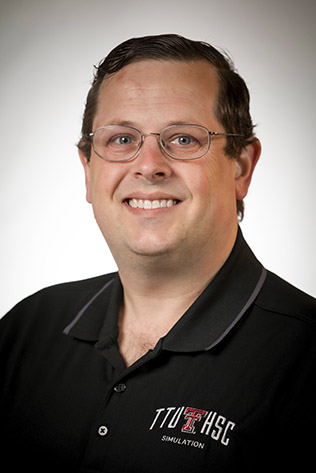
PhD, CHSOS, CHSE
Daniel Backlund is the Senior Director for Simulation IT Integration for the Texas Tech University Health Sciences Center Simulation Program. He is in charge of monitoring, assessing, and maintaining the IT infrastructure at all locations that belong to the Simulation Program. This includes the computers used for daily work as well as computers, servers, and special A/V equipment that is a part of our integrated A/V system.
Daniel’s simulation experience began in the Fall of 2010 when he joined the simulation team at TTUHSC after completing his PhD in theoretical semiconductor physics. He learned about the different different sim modalities by observing simulation and becoming involved in the setup and execution of simulation-based activities. Throughout that time, he managed the A/V system for certification courses, OSCEs, and other forms of simulation and continues to support the program through other means such as web development, application evolution, and nurturing existing relationships with the other team members at TTUHSC and vendors.
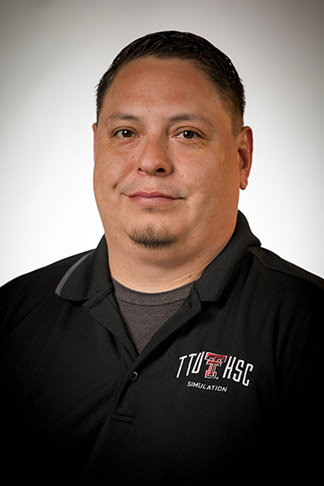
Rolando is a Simulation Technician at Texas Tech University Health Sciences Center. As a Lubbock native, he is a graduate of Lubbock High. Rolando came to the field of simulation with 8 years of experience as a phlebotomist. Additionally, his work experience consists of patient transport, teachers aid, and catering. From diffusing a difficult situation or scheduling conflict, he utilizes the acquired skills from each of those paths to keep simulation activities running smoothly.
In the spirit of healthcare, Rolando has not stopped learning. He has completed (and mastered) moulage training. He is currently working on obtaining his CHSOS certification and is excited to attend SimGHOSTS this year. He looks forward to continued growth with the Simulation Program.
BA, EMT-B
Lance Baily, BA, EMT-B, is the Founder / CEO of HealthySimulation.com, which he started in 2010 while serving as the Director of the Nevada System of Higher Education’s Clinical Simulation Center of Las Vegas. Lance also founded SimGHOSTS.org, the world’s only non-profit organization dedicated to supporting professionals operating healthcare simulation technologies. His co-edited Book: “Comprehensive Healthcare Simulation: Operations, Technology, and Innovative Practice” is cited as a key source for professional certification in the industry. Lance’s background also includes serving as a Simulation Technology Specialist for the LA Community College District, EMS fire fighting, Hollywood movie production, rescue diving, video gaming, and global travel. He and his wife live with their three amazing children in Las Vegas, Nevada.
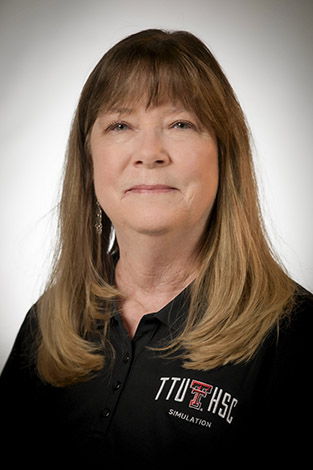
M.Ed.
Shelley Burson, M.Ed. is the Accreditation and Special Projects Manager for Texas Tech University Health Sciences Center Simulation Program.
Shelley has decades of experience with submitting accreditation applications for the American Nursing Credentialing Center (ANCC) and was the first non-nurse site visitor selected by ANCC. She also served on a very select team of TTUHSC individuals charged with the initial institutional accreditation application submitted to the Southern Association of College and Schools Commission on Colleges.
Shelley helped guide and facilitate the successful SSH accreditation of the Simulation Program in 2018 in the area of Teaching/Education, the mid-cycle accreditation in the area of Assessment in 2021, and the re-accreditation of the Simulation Program in 2023.
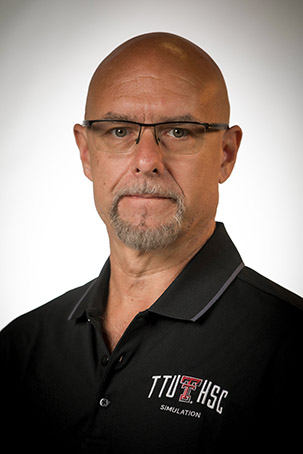
CHSOS
Keith Cherek is a Senior IT Support Technician for the Simulation Program and he began working at TTUHSC in January 2020. Prior to working in simulation, Keith worked as an Engineering Technician in Wisconsin before moving to Abilene, Texas. In 2023, Keith became CHSOS certified through SSH. At TTUHSC, he is directly involved in the programming of manikins, computers, AV equipment, healthcare equipment, moulage, and telehealth. He has also been utilizing a newly acquired 3D printer to make supplies and parts for the sim center. Keith has become a regional expert in managing the A/V equipment and simulation sessions through SIMULATIONiQ.
Bio coming soon!
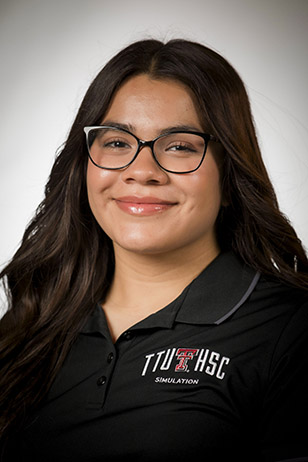
Bio coming soon!
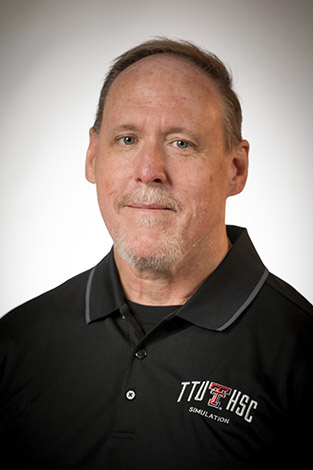
BS
Monte joined the TTUHSC Simulation Program in 2015 as Standardized Patient Program Manager. His role quickly expanded beyond Lubbock to managing the program at all TTUHSC sites. In his role, Monte oversees the hiring and scheduling of standardized patients at all sites across the Simulation Program. In order to do so, he leads an amazing team known as the SP Division. As a team, the division works closely with educators on all aspects of simulation activities integrating standardized patients.
Guy Gilbert serves as an Instructional Designer for the School of Veterinary Medicine where his primary role consists of systematically developing instructional materials and experiences to promote the acquisition of knowledge. He has worked for Texas Tech in the field of clinical simulation since 2009. Guy’s rich professional tapestry allows him to draw from a wealth of experience and allows him to apply a remarkably diverse skill set to innovate and develop valuable educational solutions. Guy completed a bachelor's degree in Multidisciplinary Studies at the University of Texas at El Paso, and two master's degrees from Colorado State University, an MS in Organizational Leadership and an MS in Management with a specialization in Instructional Design.
Guy is counted among a small number of individuals world-wide to be both, a Certified Healthcare Simulation Operations Specialist - Advanced (CHSOS-A), and a Certified Healthcare Simulation Educator (CHSE) through the Society of Simulation in Healthcare.
Guy comes from a heritage of ranching in New Mexico and Colorado where his family raised foundation bloodlines of American Quarter Horses. His upbringing fostered many of his personal interests in outdoor activities like ultramarathons, mountaineering, backpacking and fly fishing. Guy enjoys taking outdoor excursions with his wife Rebecca and their 4 children.
PhD, MBA, RRT-ACCS, RPFT, FAARC
Albert J. Heuer, PhD, MBA, RRT-ACCS RPFT, FAARC, joined Rutgers University in 1996, where he currently holds the rank of Professor. He is an adjunct faculty within the Respiratory Care Programs at Rowan University (NJ), Rush University (Chicago, Illinois) and County College of Morris (NJ). He currently designs and teaches courses related to health care quality and administration as well as respiratory care. Dr. Heuer co-authors one textbook, co-edits two others, including the world renowned, Egan’s Fundamentals of Respiratory Care. Dr. Heuer is also a consulting research scientist within Atlantic Health System’s Simulation Lab where he has accelerated their scholarly output related to simulation. Furthermore, Dr. Heuer has published numerous articles and book chapters, and has conducted many invited presentations relating to health care administration, clinical simulations and respiratory therapy. Dr. Heuer is a Fellow in the American Association for Respiratory Care (FAARC) and is past recipient of the Rutgers Master Educator Guild and the Rutgers Excellence in Teaching Awards.
PhD, RN, CHSE, ANEF
Kyle Johnson is the Executive Director of the Texas Tech University Health Sciences Center Simulation Program, a multi-site Society for Simulation in Healthcare accredited interprofessional simulation program in Teaching/Education and Assessment, with 7 sites extending from West Texas to the Dallas-FW Metroplex. Kyle also is a Professor in the School of Nursing and the Covenant Health Systems Endowed Chair in Simulation and Nursing Education
His program of research centers on best practices for learners in observer roles and the impact of debriefing in simulation based experiences. His research publications on the observer role and debriefing have been recognized as articles of influence to the simulation community by the Society for Simulation in Healthcare and he received the Debra Spunt Doctoral Research Award from the National League for Nursing. He most recently co-authored the newest revision of the Healthcare Simulation Standard of Best Practice: The Debriefing Process that will be published in 2025.
MBA, NREMT, CHSE, CHSOS
Jarrod has held many positions within the TTUHSC Simulation Program. In 2005 Jarrod began working part time as a Standardized Patient. After graduating with his bachelor’s degree from TTU he started working full time at TTUHSC as the Standardized Patient Program Manager. After this initial full-time role, he has acted as a Simulation Technician and the Simulation Operations Manager.
In 2018 he graduated with his MBA from the TTU Rawls College of Business and eventually transitioned into his current role of Associate Managing Director of Finance and Operations. Jarrod is a nationally registered EMT, an AHA Certified BLS Instructor, and has completed his CHSOS and CHSE certifications through the Society for Simulation in Healthcare.
Bio coming soon!
M.Ed, RN, CHSE
Terran Krake serves as the Director of Standardized Patient Education and Interprofessional Simulation at the Texas Tech University Health Sciences Center. With over a decade of experience in simulation-based education and a professional background in nursing, Terran brings both clinical insight and operational expertise to her role.
Terran began her journey in simulation at the TTUHSC Abilene campus, where she played a key role in assisting with simulation logistics and managing a robust standardized patient program. Her leadership has since expanded to encompass oversight of SP education across all TTUHSC campuses, where she ensures consistent training, standardization, and quality assurance for SP-based assessments.
In her current role, Terran helps guide strategic efforts to enhance interprofessional education (IPE) and integrate SP methodologies into multidisciplinary simulation experiences. She works collaboratively with the Office of Interprofessional Education, faculty, simulation center staff, and other institutional stakeholders to promote best practices in simulation.
MS, NREMT, CHSOS
Matthew is the Director of Simulation Data Strategy, Program Evaluation, and Accreditation for the Texas Tech University Health Sciences Center. Matthew leads the TTUHSC American Heart Association Training Center and currently serves as an accreditation site reviewer and on the SSH STORM editorial board for the Society for Simulation in Healthcare. He holds a Master of Science degree in Computer Information Systems, a Bachelor of Science Degree in Business Administration, and an Associate of Applied Science Degree in Computer Information Systems. Matthew is a Certified Healthcare Simulation Operations Specialist and a Nationally Registered Emergency Medical Technician.
Matthew championed the integration of electronic health records into simulation activities at TTUHSC, subsequently co-authoring several works related to EHR. His professional hobbies include teaching, advanced spreadsheets, and data visualization.
Bio coming soon!
Bio coming soon!
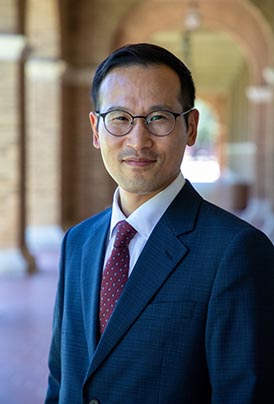
PhD, CSP
Dr. Changwon Son is an assistant professor in the Department of Industrial, Manufacturing, & Systems Engineering at Texas Tech University. Dr. Son’s research is focused on human-technology interactions including computer systems, artificial intelligence, and robot. Also, Dr. Son has deep expertise in safety through his professional and academic career. He was selected as Early-Career Research Fellow of National Academies of Sciences, Engineering, and Medicine (NASEM) Gulf Research Program. Also, he received George T. and Gladys Abell-Hanger Award from Texas Tech University College of Engineering for his excellence in teaching and service.
Bio coming soon!
Bio coming soon!
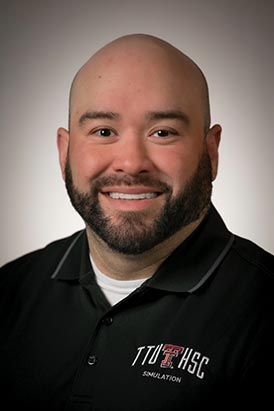
BAS, CHSOS
Moses began his career in Simulation in 2019. Prior to simulation, he worked as a medication technician and a correctional officer. In his time at TTUHSC he has contributed to many quality improvement projects for the program. Most notably, he completed a detailed guide of all disposable supplies and their indicated use in healthcare. In addition to the guide, he re-organized the supply room and developed a collaborative working document for managing inventory levels of supplies.
As a Simulation Specialist, he wears many hats including being an AHA Basic Life Support Instructor. As a BLS instructor one of his favorite activities is leading teams through friendly competition in the high-quality CPR race. For the activity, he has created a “wall of champions” complete with trophies for winning competitors. In other areas, Moses has proven innovative by manipulating lines, drains, and other supplies to enhance the realism of task trainers and scenarios. He attributes his growth as an operations specialist to attending multiple conferences. Additionally, Moses had the opportunity to complete the NLN SIRC courses and acknowledges their contribution to his growth.
In 2024, Moses obtained his CHSOS certification. He has a Bachelor of Science degree in Science, Technology, Engineering, and Mathematics from Wayland Baptist University. He is currently working on completing his Master’s degree in Business Administration from Wayland. Moses keeps current with simulation as a member of Simulation Professionals of Texas (SPOT) and looks forward to SimGHOSTS every year. As he is fascinated by the film and production industry, outside of work and school, he is often found at the cinema. He also enjoys attending concerts. Most recently, he attended Coldplay, Gary Allan, and Beyonce.
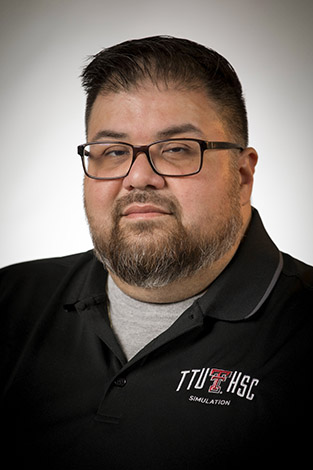
BS
Peter Villa is a Simulation Operational Specialist at Texas Tech University Health Science Center in Lubbock, Texas. He was born and raised in Chicago Illinois and moved to Texas in his early twenties. Peter has a Bachelor’s degree in Education from Texas Tech University. He started his simulation career in 2012 as a Standardized Patient. After participating in numerous patient encounters with students from School of Medicine and Nursing, he joined the team as a Simulation Technician in 2013.
As a Simulation Technician at TTUHSC, he completed a Military Moulage course near Washington D.C.. Peter has been a member of SSH since completing his CHSOS certification in 2016. Upon completion, he was promoted to Simulation Center Specialist. As a Specialist, his knowledge in the world of healthcare simulation has continued to expand. He has since completed advanced moulage training courses and now serves as a moulage instructor for the TTUHSC Simulation Program.
Peter attributes his knowledge and skills to the multiple conferences he has attended throughout the years. These opportunities have allowed him to expand his knowledge of simulation pedagogy and scenario development. Further, they have enhanced his ability to work with various schools (Medicine, Nursing, Biomedical Sciences, Allied Health and Pharmacy) to deliver impactful simulation. Peter’s personal goal is to advance the field of Simulation. He deeply values the way healthcare simulation was done in the past. Though he has seen many advances in simulators beyond using oranges for injections, he believes we can all still do better to enhance the fidelity and quality of healthcare education.
Bio coming soon!
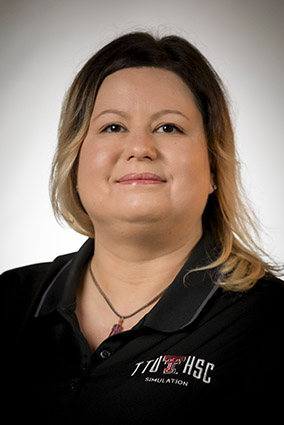
CHSOS
Jessi Jo Wills is the Section Supervisor at Texas Tech University Health Sciences Center Simulation Program – Permian Basin, overseeing simulation operations in Odessa and Midland, TX. In 2016, she started at TTUHSC Simulation Program as a Standardized Patient while obtaining her Associate’s Degree in Cosmetology with a specialization in makeup artistry and barbering.
In 2021, Jessi joined the Simulation Team full-time as a Coordinator. Jessi obtained her CHSOS certification in 2023 and was promoted to her current role as Section Supervisor in 2024. The path has allowed her to merge her passions for healthcare and special effects makeup.
Jessi lead the Permian Basin Simulation Team to a 1st place win in the SimGHOSTS It’s Alive Halloween Contest. Additionally, she has altered task trainers to meet the needs of learners. These alterations utilize upcycled simulation supplies and have allowed learners to practice skills, such as feeding with G-tubes and applying tourniquets to an active bleed. Jessi is currently working with a team on the development of a task trainer for pericardial effusion. If accepted, she looks forward to showcasing the task trainer at IMSH SimVentors.